
Asbestos Removal Services
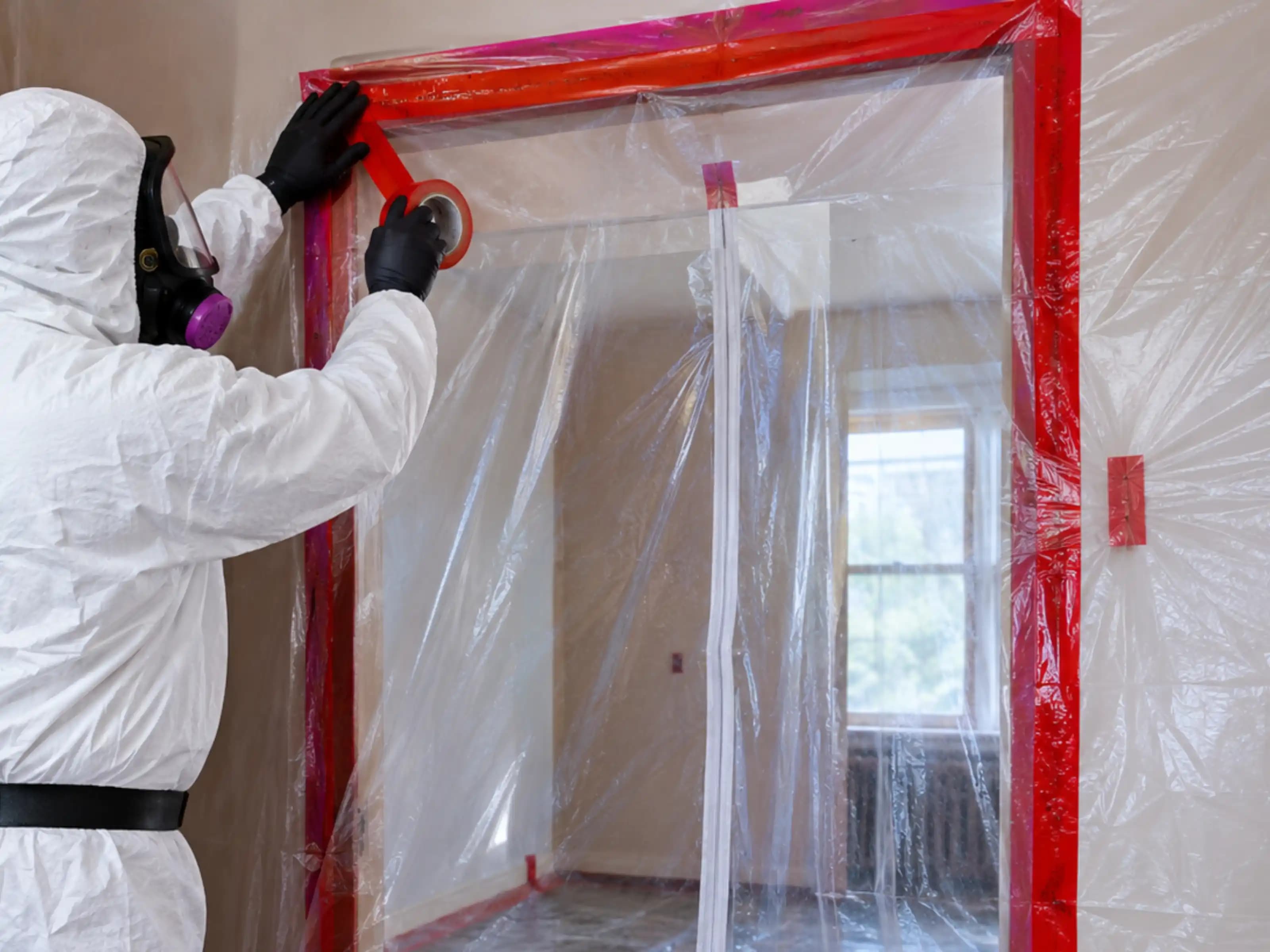
Asbestos abatement with proper containment, certified protective equipment, licensed disposal, and clearance documentation, coordinated from first assessment through final sign-off.
- Controlled containment process
- Licensed waste disposal
- Clearance documentation
- Residential & commercial
- Controlled abatement process
- Licensed disposal and manifests
- Clearance and final documentation
- Residential and commercial projects
Find Your Starting Point
Why Asbestos Removal Requires a Controlled Process
Asbestos-containing materials that are stable and left undisturbed typically pose less immediate concern. The risk comes when those materials are cut, sanded, broken, or demolished without controls. Fibers are invisible to the eye. A controlled abatement process using containment, proper work methods, disposal, and clearance is what prevents that risk from spreading to the rest of the property.
- Disturbing asbestos-containing material without controls can release microscopic fibers associated with serious respiratory illness.
- Containment prevents contamination from spreading beyond the work zone to adjacent areas of the building.
- Testing or an asbestos survey should confirm what materials are present and where before removal work begins.
The health risk from asbestos in buildings is most closely associated with disturbance. Materials in good condition that will not be disturbed are a different concern than materials that are deteriorating, friable, or in the path of construction activity.
Mesothelioma
A rare cancer of the lining of the lungs, abdomen, or heart, associated primarily with asbestos fiber inhalation. Symptoms may not appear for decades after exposure.
Lung cancer
Asbestos fiber inhalation is associated with increased lung cancer risk. The risk is higher with sustained exposure, particularly in occupational settings.
Asbestosis
A chronic lung condition caused by scarring from inhaled asbestos fibers. Asbestosis affects breathing capacity and worsens over time.
Testing, Removal, or Emergency: Where Your Project Starts
You may need testing first if…
- You're planning renovation on a pre-1980 property and don't yet have test results
- A suspect material was identified during inspection or due diligence
- You're buying, selling, or refinancing an older property
- You want to confirm whether material in good condition contains asbestos before it is disturbed
You likely need removal if…
- Testing confirmed asbestos in a material that will be disturbed by planned work
- An asbestos-containing material is deteriorating, friable, or releasing fibers
- Renovation or demolition is scheduled and affected materials must be cleared first
- A buyer, lender, or property requirement calls for abatement before closing
You may have an emergency if…
- Work was done and suspect material was cut, broken, or disturbed without controls
- Water damage, fire, or a storm has soaked or collapsed older building materials
- Pipe insulation broke or crumbled in a basement, attic, or mechanical space
- A ceiling collapsed exposing older insulation or drywall
Not sure which applies? Contact Peerless Environmental. We can help you identify the right starting point.
Asbestos Testing and Inspection Come First
Removal decisions should be based on confirmed test results, not visual inspection alone. You cannot see asbestos fibers. They are microscopic. Visual inspection cannot tell you whether a material is contaminated. Without testing, you do not know what is present, what controls are needed, or whether removal is even the right approach.
- 1
Identify suspect materials
A trained inspector reviews the property to identify materials that may contain asbestos based on age, type, condition, and planned disturbance.
- 2
Collect samples
Small samples are collected from suspect materials following controlled protocols. Proper containment during sampling prevents fiber release before results are known.
- 3
Receive written results
An accredited laboratory analyzes each sample and returns written findings. Results identify what is present, where, and what abatement decisions should follow.
If testing has not yet been done, Peerless Environmental can help coordinate that step before removal planning begins.
Related reading: abatement vs. removal, what to do if asbestos is found, and what drives removal cost.
Types of Asbestos Removal Services
Different materials require different removal approaches. The right method depends on the material type, its condition, project scope, and what comes next. The service types below represent the most common asbestos removal needs in residential and commercial properties.
Floor Tile and Mastic Removal
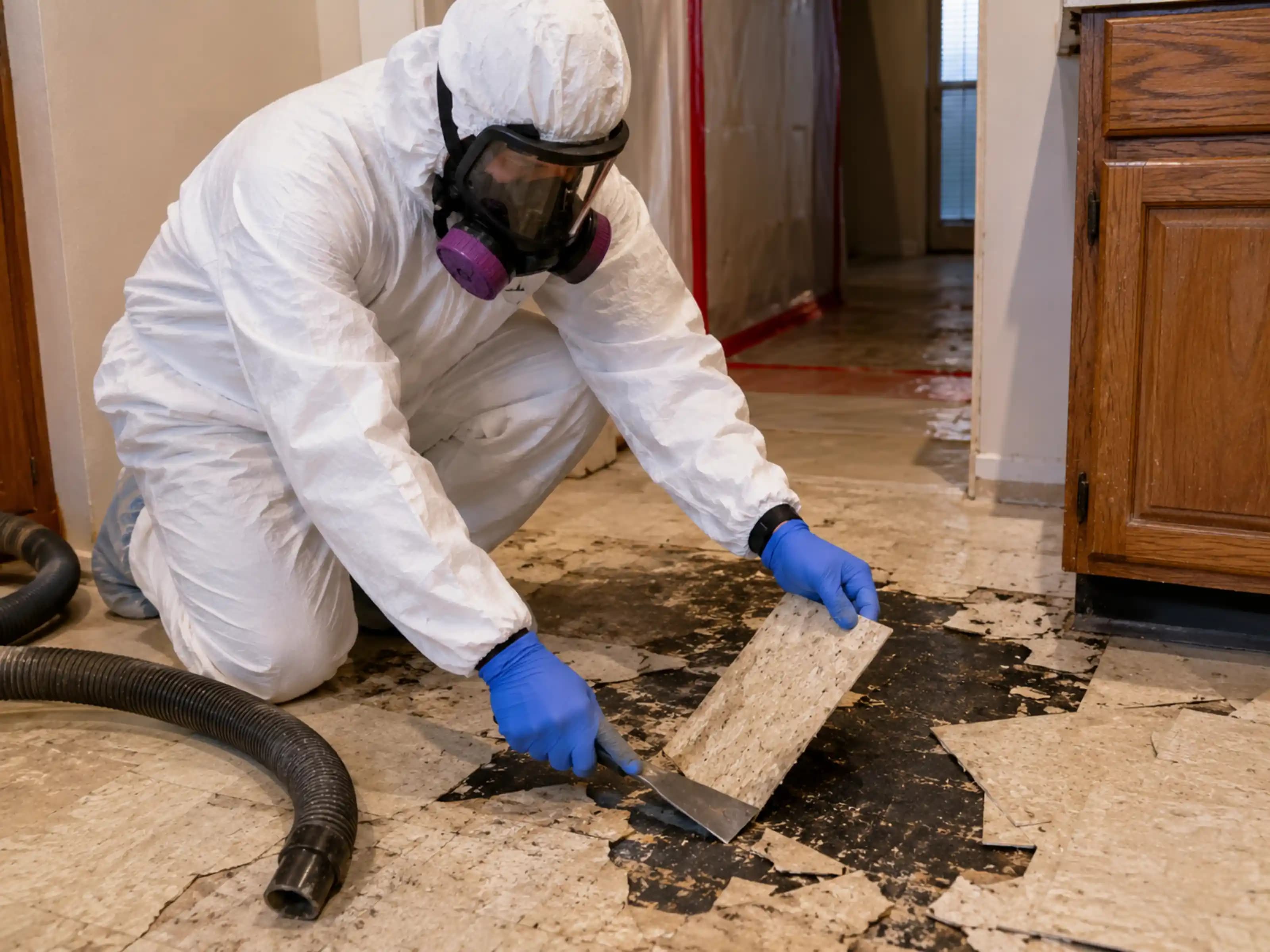
Vinyl floor tiles and the black mastic adhesive beneath them are among the most common asbestos removal scopes in older construction. Both material types are handled with wet methods and controlled packaging to reduce fiber release during removal.
Popcorn Ceiling Removal
Spray-applied textured ceiling coatings were frequently manufactured with asbestos before the 1980s. Removal requires wetting the material before disturbance and working under containment. Testing should confirm whether asbestos is present before any ceiling scraping begins.
Pipe and Duct Insulation Removal
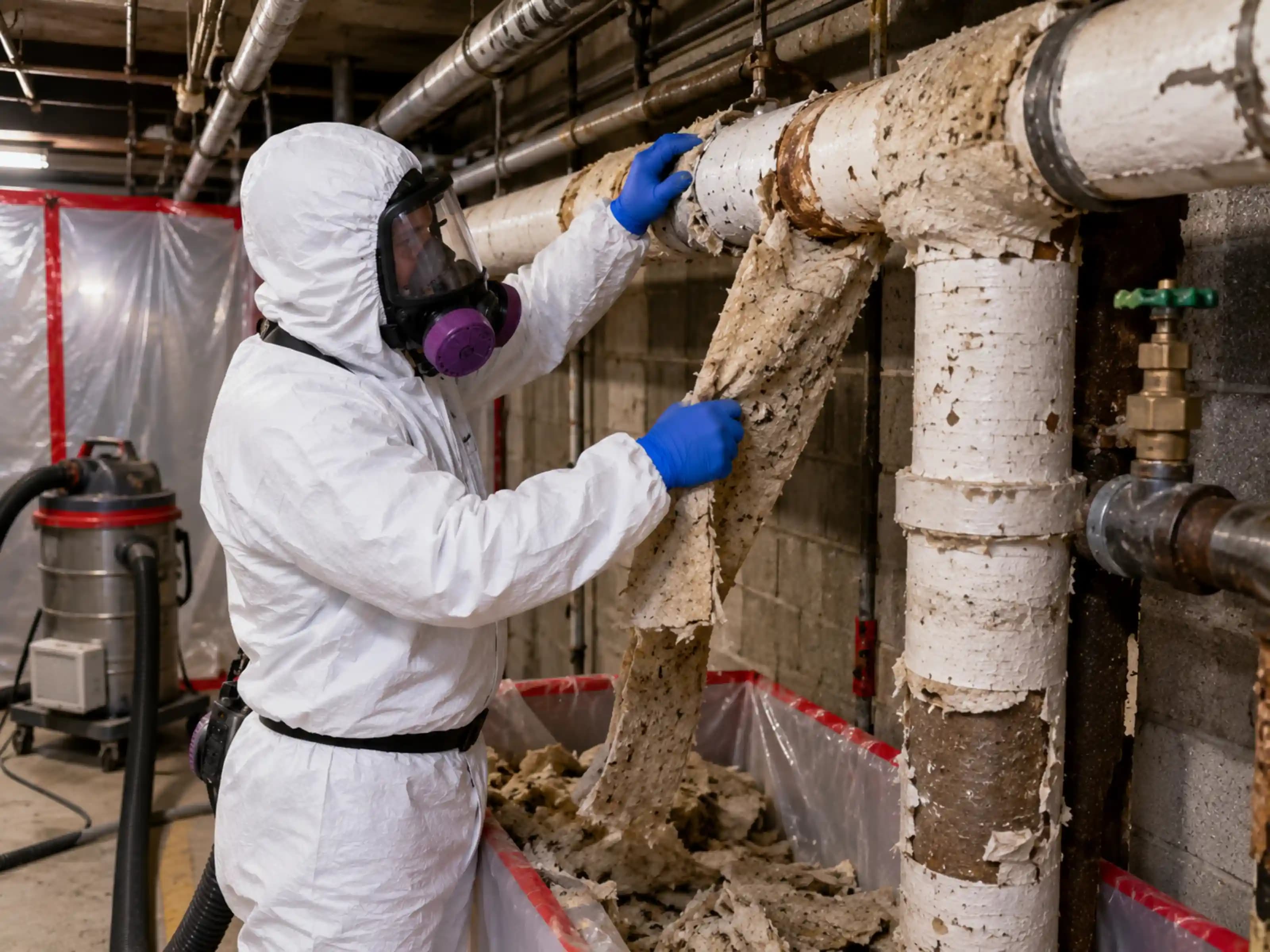
Pipe lagging, pipe wrap, and HVAC duct insulation in older buildings can contain asbestos. Friable insulation, material that crumbles easily, requires careful wet removal, controlled packaging, and containment to prevent fiber release.
Roofing and Siding Removal
Asbestos cement was used in roofing shingles, siding panels, and corrugated sheeting. These materials are removed intact where possible. Brittle or weathered material requires more controlled handling to manage fiber release during removal.
Commercial Asbestos Abatement
Commercial properties may contain asbestos in multiple locations: flooring, ceiling systems, insulation, HVAC, roofing, and more. Tenant improvements, facility maintenance, and pre-demolition abatement all create commercial removal needs.
Residential Asbestos Removal
Homeowners encounter asbestos removal needs most often during renovation planning, after a positive test result, or before selling an older property. Scopes range from a single material in one room to full-home abatement before a major renovation.
Emergency Asbestos Cleanup
Asbestos-containing material can be accidentally disturbed by storm damage, water damage, fire, or a renovation discovery. When that happens, immediate containment and controlled cleanup are needed to limit fiber spread.
Common Asbestos-Containing Materials
Hundreds of building products once contained asbestos, and each behaves differently once removal begins. The materials below were the most common in residential and commercial construction through the 1970s. Age and product type mark a material as suspect; laboratory analysis is what confirms it before any removal is scheduled.
- Floor tiles and mastic adhesive
- Old vinyl floor tile and the black cutback mastic under it are frequent asbestos sources, and the adhesive can test positive even when the tile does not. The two are handled together during removal.
- Pipe and duct insulation
- Pipe wrap, lagging, and HVAC duct insulation in pre-1980s buildings are often friable, so removal has to be done under containment to keep fibers from becoming airborne.
- Popcorn and textured ceiling coatings
- Spray-applied 'popcorn' ceiling texture often contains asbestos, and scraping it dry is one of the most fiber-releasing tasks in a removal. It is wetted and contained instead.
- Drywall joint compound
- Older joint compound may contain asbestos as a reinforcing fiber. Sanding, even a small patch, can release fibers if asbestos is present.
- Roofing and siding materials
- Asbestos cement shingles, siding panels, and corrugated sheeting pose different concerns intact versus during demolition or removal.
- Attic and wall insulation
- Loose-fill insulation, particularly vermiculite, may be contaminated with asbestos and should be assessed before any disturbance.
If you recognize any of these materials in your property, professional testing is the right first step before any renovation or removal work begins.
Learn About Asbestos TestingThe Asbestos Removal Process
Asbestos abatement follows a structured six-step sequence from initial scope confirmation through final clearance documentation. Each stage is designed to control fiber release, protect people, and document the work.
- 1
Scope confirmation
We review the test results, survey findings, and project plans to confirm the full abatement scope. That covers which materials will be removed, the work sequence, and any applicable documentation requirements.
- 2
Containment setup
The work area is isolated using poly barriers, negative air pressure, and controlled access points. HVAC systems serving the work zone are shut off. Workers are in appropriate PPE including respirators and disposable protective suits.
- 3
Controlled removal
Asbestos-containing materials are removed under containment using methods appropriate to the material. Wet methods are used where applicable to suppress fiber release. Waste is packaged as it is generated in properly labeled, sealed containers.
- 4
Decontamination and cleanup
After removal is complete, the work area is HEPA-vacuumed and wet-wiped. Remaining waste is staged and sealed. Workers decontaminate before exiting the containment zone to prevent tracking fibers to clean areas.
- 5
Waste disposal
Containerized asbestos waste is transported by licensed carriers to a permitted disposal facility. Waste manifests are completed and retained as part of the project documentation.
- 6
Clearance and documentation
Containment comes down in a controlled sequence. Final clearance, air sampling or visual inspection as required, confirms the area is ready for the next phase. Written clearance documentation is provided.
Why Property Owners Across the Southeast Choose Peerless Environmental
From single-material residential removal to full building pre-demo abatement, Peerless Environmental coordinates asbestos abatement built around controlled work and documentation. That documentation supports real estate transactions, permit closeouts, and contractor handoffs.
Who Handles Your Project
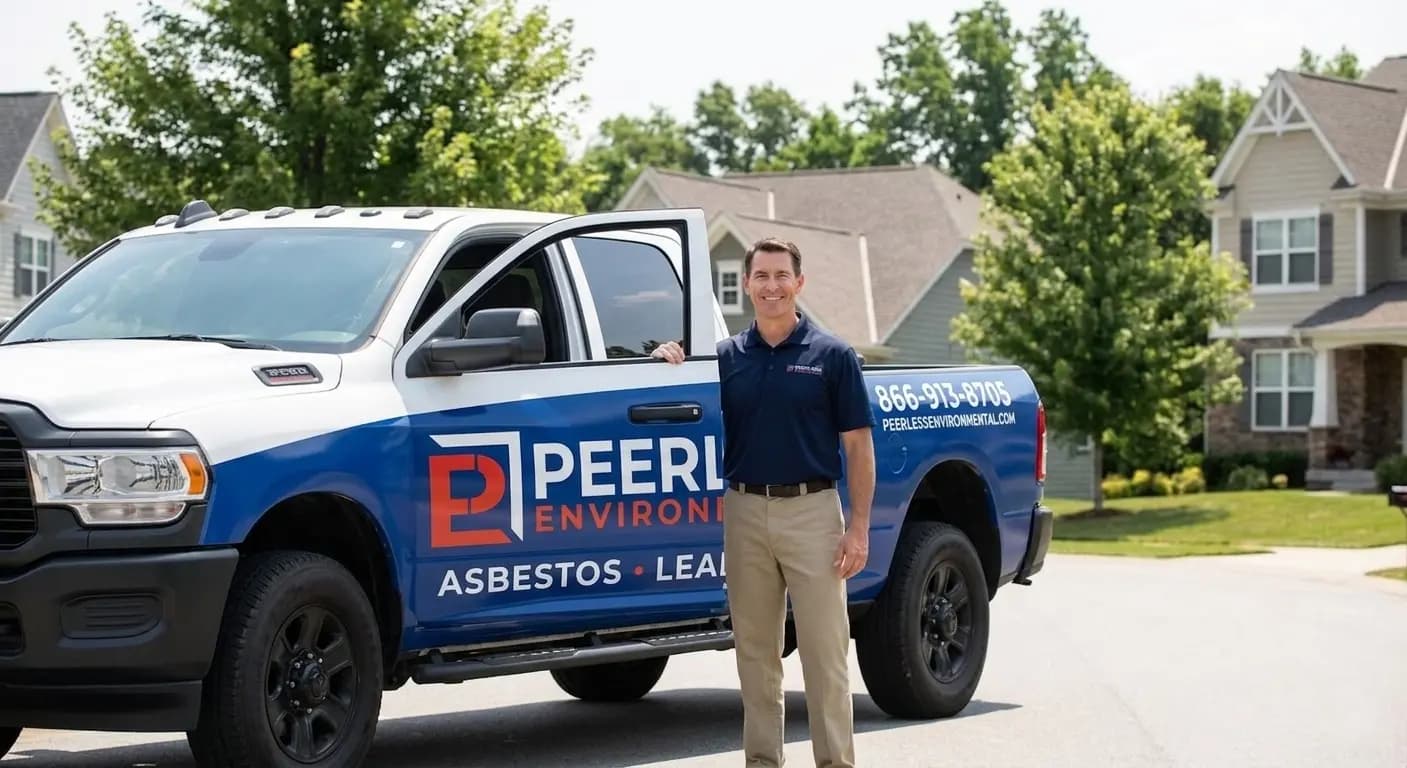
Every Peerless Environmental project is coordinated by a dedicated project manager. That manager confirms scope, schedules the licensed abatement crew, and walks you through the documentation before and after work is complete.
- A single point of contact from estimate to clearance
- Licensed abatement crews with current training and certifications
- Written documentation delivered at project close
Coordinated project management
Peerless Environmental coordinates each step of the abatement process: from scope confirmation and containment planning through removal, disposal, and final clearance. This keeps the project moving forward on a clear timeline.
Full-service capability
If testing is needed before removal, Peerless Environmental can coordinate that step as well. You do not need a separate contractor to move from testing through abatement.
Proper containment and work controls
Every project uses containment, negative air pressure, wet methods where applicable, and appropriate PPE to manage fiber release during removal. Work controls are established before removal begins.
Licensed disposal and documentation
Asbestos waste is handled through licensed carriers and permitted disposal facilities. Manifests and clearance documentation are provided as part of the project record.
Residential and commercial capability
Older homes, commercial buildings, institutional facilities, and mixed-use properties each have different scopes, timelines, and documentation requirements. Peerless Environmental handles residential and commercial abatement projects.
Regional Southeast coverage
Peerless Environmental serves properties across the Southeast. Contact us directly to confirm coverage for your location.
Find Your Local Peerless Environmental Team
Peerless Environmental serves property owners across key Southeast markets. Choose your area to find local service details, contact options, and next steps for asbestos, lead, and radon concerns.
South Carolina
For Homeowners & Buyers
Residential Asbestos Removal
Homeowners most often need asbestos removal when planning renovation on an older property, after a positive test result, or before a property sale or closing. Removal is also needed when a deteriorating material is identified. The scope can range from a single material in one room to multiple materials throughout the home before a full renovation or resale.
- Floor tile and mastic removal before new flooring installation
- Popcorn ceiling removal before painting, renovation, or listing the property
- Pipe or boiler insulation removal in basements, utility rooms, or attics
- Drywall or plaster abatement before an addition, remodel, or interior repair
- Whole-home abatement before a major renovation or resale preparation
- Response after water, fire, or storm damage that has disturbed or exposed materials
Residential asbestos removal begins with reviewing any test results or survey findings to understand what is present before the scope and timeline are confirmed. If you are working toward a closing date or listing deadline, let us know early. Timeline depends on scope and scheduling.
For Property Managers & Contractors
Commercial Asbestos Removal
Commercial buildings constructed before the 1980s often contain asbestos in multiple locations: flooring, ceiling systems, insulation, HVAC components, roofing, and siding. Tenant improvements, capital projects, routine maintenance, and demolition all create asbestos removal needs.
- Tenant improvement abatement before interior work begins in older commercial spaces
- Pre-demolition asbestos survey and full building abatement before teardown
- HVAC duct wrap and pipe insulation removal in commercial mechanical systems
- Roofing and siding abatement for commercial exterior renovation projects
- Institutional facility abatement: schools, hospitals, government and public buildings
- Post-event response after fire, flood, or storm activity that has disturbed building materials
Commercial abatement projects typically include documentation for permit closeouts, insurance carriers, and contractor handoffs. Contact Peerless Environmental with your property details, including any existing survey or assessment findings, to discuss scope and timeline.
For Contractors & Renovation Teams
Renovation and Demolition Abatement
Renovation and demolition are the two most common triggers for asbestos removal. Each creates different abatement needs based on the scope of disturbance.
Before Renovation
Renovation disturbs materials selectively. A floor is pulled up, a ceiling is scraped, a wall is opened. Even targeted work can release fibers from asbestos-containing materials in the project path. Abatement scoped to the renovation plan addresses the specific materials that will be disturbed so construction can proceed on a cleared area.
Before Demolition
Demolition disturbs an entire structure at once. That includes walls, ceilings, flooring, and mechanical systems together. An asbestos survey before demolition identifies all materials that need to be addressed first. Full building abatement is completed before demolition equipment moves in. Commercial and institutional demolition projects fall under the EPA NESHAP asbestos rule. That rule sets notification and abatement requirements once a project will disturb at least 160 square feet, 260 linear feet, or 35 cubic feet of regulated asbestos-containing material.
Abatement requirements for renovation and demolition vary by project type, property use, building size, and applicable rules. Contact Peerless Environmental with your project details before work begins.
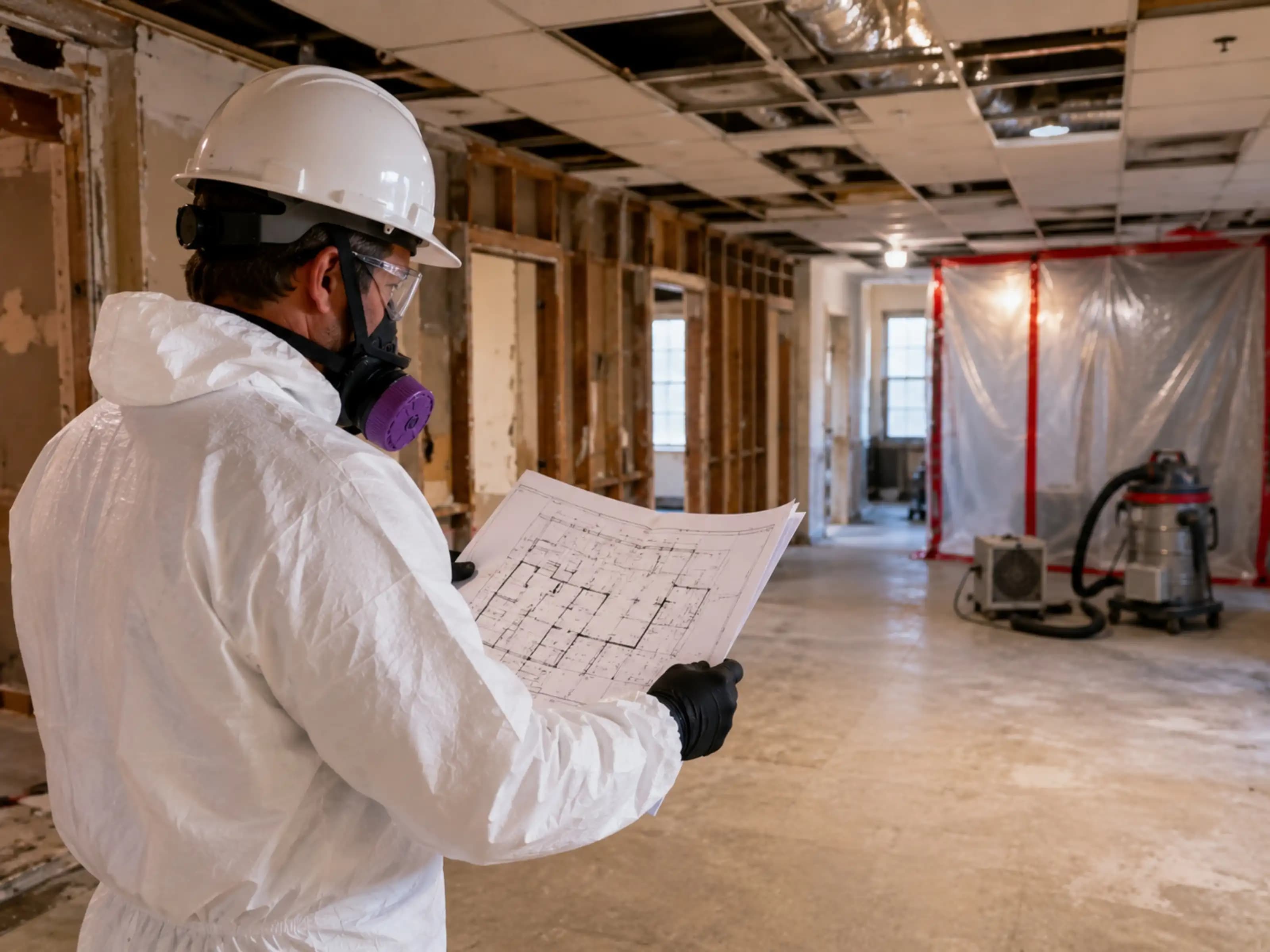
Emergency Asbestos Response
Asbestos-containing material can be unexpectedly disturbed: by storm damage, water damage, fire, a collapsed ceiling, or a renovation discovery. When that happens, the steps taken in the first hour matter. The goal is to stop the spread of fibers before more of the building is affected.
Suspected asbestos disturbance? Stop work and call us now.
What to Do If Asbestos May Have Been Disturbed
- 1Exit the affected area immediately: stop work, leave the room, and close the door behind you
- 2Keep people away. Do not allow anyone to enter the area
- 3Close off the area from the rest of the building if safe to do so
- 4Do not sweep, vacuum, or mop debris
- 5Do not move or further break suspect materials
- 6Call Peerless Environmental at 866-891-6244 before re-entering the area
Common Emergency Triggers
- Water damage that has soaked or collapsed older building materials
- Fire damage that has burned or disturbed pipe insulation or ceiling materials
- Storm damage to roofing, siding, or structural materials
- Ceiling collapse exposing older insulation or drywall
- Broken pipe insulation in a basement, attic, or mechanical room
- Renovation work that inadvertently cut into or removed suspect material
What Backs Our Work
Every Peerless Environmental location follows the same safety-first standard, so you get clear answers no matter which local team you call.
AHERA & EPA RRP Certified
AHERA certification for school and public building asbestos inspections, and EPA RRP certification for lead-safe work practices.
Clear Reports & Documentation
Results you can understand and share with owners, buyers, managers, or regulators.
Compliant Work Methods
Procedures aligned with EPA and state environmental regulations, from site preparation through final documentation and clearance.
Local Teams, Shared Standards
Market-level response backed by the Peerless Environmental process.
Planning Your Asbestos Removal Project
What Drives Your Asbestos Removal Cost
Asbestos removal costs vary significantly based on the specific scope of work. The factors below explain why a project-specific estimate, based on an on-site review, is needed before accurate pricing can be provided.
- Type of material being removed (floor tile, ceiling texture, pipe insulation, siding, etc.)
- Amount of material: total area or linear footage to be removed
- Location and access within the building (basement, attic, crawlspace, high ceilings)
- Condition of the material: friable material requires more careful handling
- Containment complexity based on work zone size and adjacency to occupied areas
- Disposal requirements and proximity to permitted disposal facilities
- Whether clearance air testing is required after removal
- Scheduled work versus emergency or rapid-response abatement
- Residential versus commercial scope and documentation requirements
Our asbestos removal cost calculator gives you a rough range from published national averages, which is enough to budget. It is not a quote: Peerless Environmental does not price a project without reviewing it, because access, condition, and containment move the number more than square footage does. Contact us to schedule a site review and receive a project-specific estimate.
See Asbestos Removal Cost FactorsProject Timeline
Asbestos abatement involves controlled work with access restrictions and specific preparation steps. Here is what typically happens at each phase of a project.
Most residential single-material scopes complete in 1–3 days. Larger residential or commercial projects vary based on scope, access, and containment requirements.
- We confirm the project scope, schedule, and any site access requirements
- Occupants receive specific instructions for which areas to avoid and when
- Utilities serving the work zone may need to be temporarily shut off
- The abatement team sets up containment before any material is disturbed
- The work area is under controlled access: only credentialed workers enter
- Containment and negative air pressure are active throughout removal
- Workers are in full PPE and follow decontamination procedures entering and exiting
- Work involves normal construction-level noise. No unusual odors should be present
- The work area is cleaned and containment is removed in a controlled sequence
- Clearance testing or visual inspection confirms the area is ready
- You receive written documentation: scope summary, waste manifests, clearance results
- The area is available for the next phase of the project after clearance is confirmed
What You'll Receive
- 1
Clearance testing
Clearance air sampling or visual inspection after containment is removed confirms that the work area is ready for reoccupancy or the next phase of construction. For some projects, clearance is a required step before further work can proceed.
- 2
Project documentation
The documentation package typically includes a scope-of-work summary, waste disposal manifests, and written clearance results. This record supports real estate transactions, permit closeouts, contractor handoffs, and ongoing property documentation.
- 3
What comes next
After clearance, the area is ready for renovation, demolition, new construction, reoccupancy, or whatever the project plan required. If additional asbestos-containing materials are discovered during removal, those findings are communicated before additional work proceeds.
Removing Asbestos Yourself Creates Exposure Risk
Some property owners ask whether small amounts of asbestos-containing material can be removed without professional help. The short answer is: disturbing suspect material before you know what it is creates exposure risk that a test result could have prevented.
- ✕Do not cut, sand, scrape, drill, or break suspect materials
- ✕Do not sweep or vacuum debris from a suspected asbestos disturbance
- ✕Do not put asbestos-containing waste in regular garbage
- ✕Do not reuse tools or materials that have contacted asbestos waste
Professional abatement uses containment, proper work methods, licensed disposal, and clearance documentation to protect the property and the people in it. Contact Peerless Environmental before disturbing any suspect material.
What Customers Say
Reviews reflect Peerless Environmental customers across the markets we serve. Individual results and project details vary. Read our testimonial disclaimer.
“From the initial assessment to the clearance documentation, the process was professional and well-communicated. No surprises.”
“The team kept us informed throughout removal and the final clearance report gave us the confidence to move forward with our renovation.”
Common Asbestos Removal Questions
Understanding Asbestos
How do I know if I have asbestos?
You cannot confirm asbestos by appearance alone. Asbestos fibers are microscopic, and many asbestos-containing materials look identical to materials that contain none. The only reliable way to confirm whether a material contains asbestos is laboratory analysis of a physical sample collected by a trained inspector. If your property was built before the 1980s and contains materials that may have been manufactured with asbestos, a professional inspection and testing is the right starting point.
Is asbestos dangerous if it is not disturbed?
Asbestos-containing material that is in good condition and will not be disturbed by a project or by deterioration poses one level of concern. Material that is friable, damaged, or in the path of renovation poses a different level. Many older buildings contain asbestos-containing materials that are managed in place rather than removed. A professional assessment helps determine whether the material's current condition and setting warrant active abatement or ongoing monitoring.
Is asbestos removal always required when asbestos is found?
Not always. Asbestos-containing material that is in good condition and will not be disturbed by the project may be managed in place. That can mean encapsulation, enclosure, or ongoing condition monitoring. Removal is typically needed when material is deteriorating, friable, or in the direct path of planned renovation or demolition work. A professional assessment helps determine the right approach for the specific material and project.
What is the difference between asbestos removal and asbestos abatement?
Asbestos removal is one method of asbestos abatement. Abatement is the broader professional process used to control asbestos hazards. It can include removal, encapsulation, enclosure, repair, cleanup, disposal, and clearance depending on the material and the project. Removal is the most complete option but not always the only appropriate one.
The Removal Process
Do I need asbestos testing before removal?
Yes. Asbestos removal decisions should be based on confirmed test results, a completed asbestos survey, or existing laboratory documentation. Testing establishes what materials are present, where they are, and what the scope of abatement should be. Without that confirmation, the abatement plan cannot be properly scoped. If testing has not yet been done, Peerless Environmental can help coordinate that step.
How much does asbestos removal cost?
Asbestos removal costs vary based on material type, quantity, location, access, containment complexity, disposal requirements, and whether clearance testing is needed. A single-room floor tile removal is a different scope and cost than full-building pre-demo abatement. Peerless Environmental does not quote prices without a project review. Contact us to schedule a site assessment and receive a project-specific estimate.
How is asbestos removed safely without spreading fibers?
Professional abatement uses containment barriers, negative air pressure, wet removal methods, proper PPE, and controlled waste packaging. These controls prevent fibers from becoming airborne and spreading beyond the work area. After removal is complete, the work area is HEPA-vacuumed, wet-wiped, and cleared before containment comes down.
What should I do if asbestos was accidentally disturbed?
Exit the affected area immediately. Keep people out. Do not sweep, vacuum, or mop debris. Do not move or further break any suspect material. Close off the area if it is safe to do so. Then call Peerless Environmental at 866-891-6244 before re-entering. The steps taken in the first hour can limit how far fiber contamination spreads.
Planning & Next Steps
Can asbestos be encapsulated instead of removed?
In some cases, yes. Encapsulation, applying a penetrating or bridging material to bind fibers, is an option in some situations. It applies when asbestos-containing material is in acceptable condition, will not be disturbed by the project, and the encapsulant can be maintained. Encapsulation is not appropriate for all materials or project types. A professional assessment determines whether removal or another abatement method is the right approach.
What documentation do I receive after asbestos removal?
The documentation package typically includes a project summary describing the scope and materials addressed. It also includes waste disposal manifests confirming how asbestos waste was handled, and written clearance results. This documentation supports real estate transactions, renovation permits, contractor handoffs, and ongoing property records.
Do I need to leave my home or building during asbestos removal?
In most cases, occupants are not permitted in the work area during asbestos removal. Depending on the scope and location within the building, you may be able to remain in unaffected areas. Your project team will give specific guidance for your property and situation before work begins.
How do I request asbestos removal?
Use the request-service form or call your nearest Peerless Environmental location. If you have existing test results or a survey report, have it available. It helps the team understand the scope and respond accurately. If testing has not been completed, let us know and we can discuss that step as well.
Get your asbestos removal scheduled.
Request asbestos removal from Peerless Environmental. We coordinate abatement for homes and commercial buildings across the Southeast.
Each Peerless Environmental location is independently owned and operated. Services, availability, and certifications may vary by location.