
Lead Abatement Services for Safer Homes and Buildings
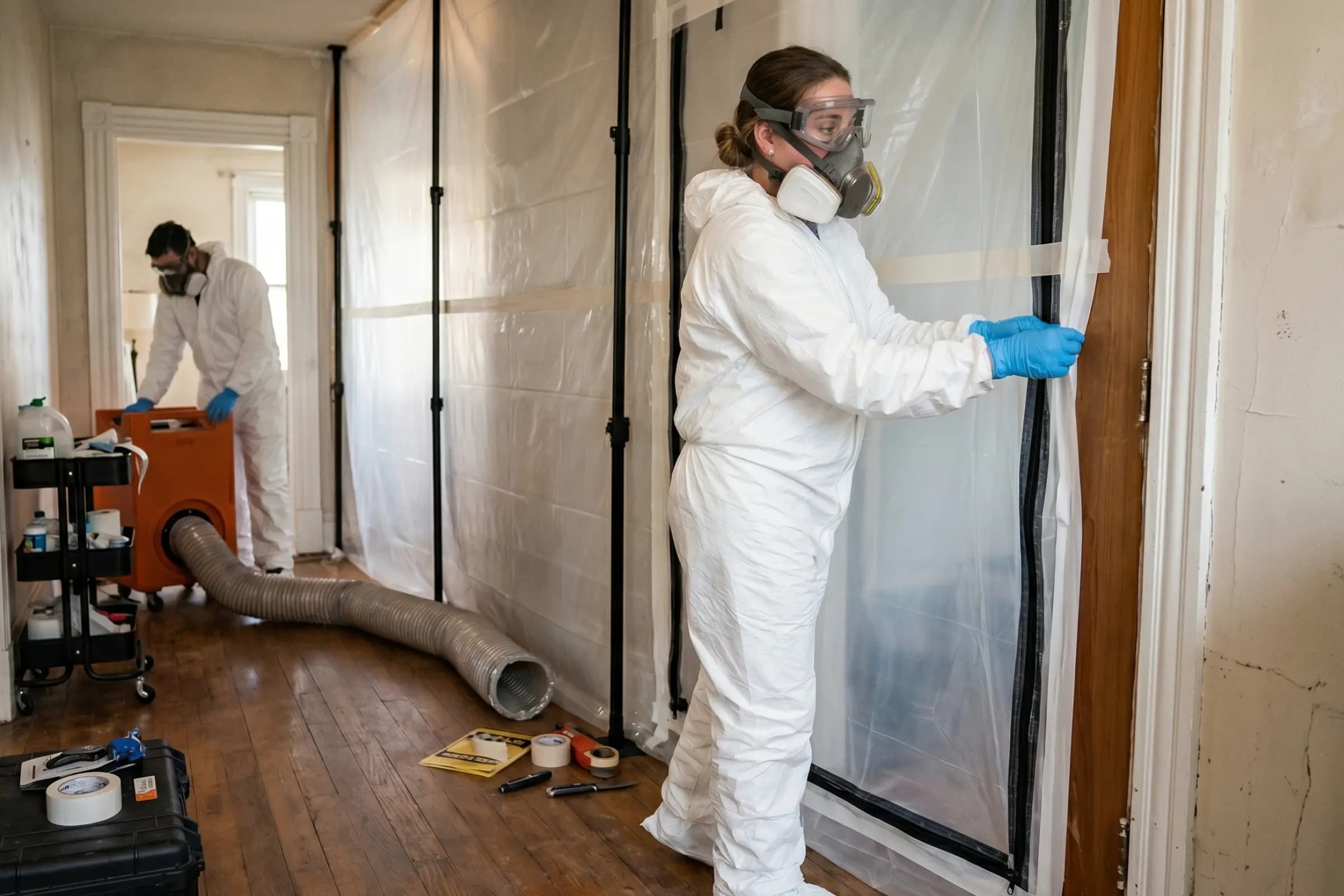
Certified lead abatement professionals inspect, contain, remove, encapsulate, and document lead hazards using safe, compliant methods for homes, schools, commercial buildings, and managed properties.
- Certified lead abatement professionals
- Licensed and insured
- Containment and HEPA cleaning
- Clearance documentation
- Certified abatement professionals
- Containment and dust-controlled work zones
- Residential and commercial properties
- Clearance documentation and compliance support
Where Your Lead Project Starts
Serving homeowners, landlords, property managers, schools, commercial owners, and contractors across the Southeast.
What Lead Abatement Is
Lead abatement is work designed to control or permanently eliminate lead-based paint hazards. The scope depends on the hazard. It may involve removal, encapsulation, enclosure, component replacement, HEPA cleaning, waste handling, and clearance documentation, the method that fits the material and project.
Lead Abatement vs. Lead Testing
Lead testing identifies where lead is present and how serious the hazard is. Lead abatement is the work used to address those hazards after they are found. Many projects begin with inspection or testing and move into abatement once the scope is defined.
Lead Abatement vs. RRP Renovation Work
RRP (the EPA Renovation, Repair and Painting program) applies to renovation work. It covers work that disturbs more than 6 square feet of interior or 20 square feet of exterior lead-based paint. Lead abatement is specifically intended to control or eliminate lead hazards. They share some safety controls but are not the same service, program, or certification.
Abatement vs. Remediation
Lead remediation is a broader term that may include abatement, interim controls, or ongoing management. Lead abatement refers specifically to hazard control through certified methods such as removal, encapsulation, enclosure, and component replacement.
Lead Abatement Services
Peerless Environmental provides lead abatement services for residential and commercial properties across the Southeast. The right service depends on your property, the hazard, and your compliance and documentation needs.
Residential Lead Paint Removal
Certified removal for older homes
- Lead paint removal for pre-1978 homes, rental units, and other residential properties. Work includes containment setup, approved removal methods, HEPA cleaning, waste handling, and support for clearance documentation. Appropriate when surfaces are deteriorated, when the hazard needs to be permanently addressed, or when the scope requires full abatement.
Commercial and Industrial Lead Abatement
Larger-scope projects with documentation
- Lead abatement for commercial buildings, industrial facilities, schools, childcare facilities, and managed properties. Projects are planned around worker safety, operational downtime, containment complexity, waste handling requirements, and compliance documentation. Coordination with property owners, facility managers, and contractors is available throughout the project.
Lead Encapsulation
Surface sealing when removal is not required
- Lead encapsulation applies an approved coating or barrier over stable lead-painted surfaces. It does not remove the lead paint, so the surface must be suitable for encapsulation and may need future monitoring. Encapsulation can be appropriate when surfaces are sound, accessible, and in conditions where an approved product and preparation can be correctly applied.
Lead Enclosure
Cover and control with durable materials
- Enclosure covers lead-painted surfaces with rigid durable building materials rather than removing or coating the paint. It can be effective on surfaces where covering is practical, the underlying material is stable, and the installation can be maintained over time.
Component Removal and Replacement
Replace lead-painted parts at high-friction areas
- Component replacement removes and replaces lead-painted building parts such as windows, doors, trim, and other components. It is often the strongest option for high-friction or impact surfaces where normal use generates lead dust. Replacement here is cleaner and more permanent than surface treatment.
Lead Dust Wipe Testing and Clearance Support
Confirm the work area is clean after abatement
- Clearance testing uses dust-wipe sampling and visual inspection to evaluate an area after abatement or renovation. It documents that the work area has been properly cleaned before re-occupancy. We help plan projects around clearance needs and provide documentation for the completed scope.
Containment, HEPA Cleaning, and Site Decontamination
Controlled work zones from setup through cleanup
- All lead abatement projects require controlled containment, dust suppression, and thorough cleanup before clearance. We establish work zones, use HEPA filtration and HEPA-vacuum equipment, follow approved cleanup procedures, and decontaminate the site before clearance evaluation.
Proper Disposal and Waste Management
Regulated lead waste handled correctly
- Lead paint waste, debris, and removed components require controlled packaging, handling, and disposal. Projects include proper waste management documentation appropriate to the scope and applicable requirements.
Documentation and Compliance Reports
Written records for owners, managers, and compliance
- Every project includes written documentation of the work performed, the methods used, waste handling, and clearance results where applicable. Documentation supports compliance, property records, tenant communication, real estate transactions, and future contractor use.
Why Lead Hazards Should Be Taken Seriously
Most homes and buildings constructed before 1978 contain some lead-based paint. Paint that is intact and in good condition poses lower day-to-day concern. The risk rises with disturbance: scraping, sanding, cutting, or demolition can generate fine lead dust that cannot be seen and cannot be detected without testing.
- Lead dust from disturbed paint can be inhaled or swallowed. Children and pregnant women face elevated risk from even low-level exposure.
- High-friction and impact surfaces (doors, windows, stair components) continuously disturb paint and generate fine dust during normal use.
- DIY scraping, sanding, grinding, or demolition can spread lead dust throughout a home or building if work is not contained and cleaned correctly.
- Renovation in a pre-1978 property can turn hidden lead paint into an active hazard if painted surfaces are disturbed without a plan.
- Exterior lead paint can chip, peel, and contaminate soil over time. Exterior abatement or enclosure may include containment and soil protection.
When Lead Abatement Is Needed
Lead abatement may be needed when testing identifies a hazard, when paint is deteriorating, or when renovation will disturb painted surfaces. It may also be needed when a property must meet compliance requirements. If you have not had an inspection, that is where to start.
- Your property was built before 1978
- Paint is peeling, chipping, cracking, or deteriorating
- You are planning renovation, remodeling, or demolition work
- A lead inspection or risk assessment found a hazard
- You own or manage rental housing
- You operate a school, daycare, or child-occupied facility
- You need clearance testing and documentation
- You are buying, selling, or preparing a property
- A contractor needs a lead-safe scope before work begins
- Your property must meet HUD or other compliance requirements
Certified Lead Abatement vs. DIY Work
Scraping, sanding, or removing lead paint without proper containment can spread lead dust through a home or building. It can create a more serious hazard than the original paint. Understanding what separates certified abatement from uncontrolled DIY work helps clarify why the scope matters.
Uncontrolled DIY Work
- Scraping and sanding without containment spreads lead dust to adjacent rooms
- Standard vacuums recirculate fine lead particles rather than capturing them
- No clearance documentation, no way to confirm the area is safe after work
- Renovation that disturbs lead paint without a plan can worsen the hazard
- No written record for property owners, tenants, buyers, or compliance purposes
Certified Lead Abatement
- Work performed by trained, state certified professionals following EPA and HUD lead-safe work practices
- Containment barriers isolate the work area and prevent dust from spreading
- HEPA filtration and HEPA-vacuum equipment control airborne and settled dust
- Occupant protection plan before work begins in occupied properties
- Proper waste handling, packaging, and disposal documentation
- Final cleanup and clearance support with written documentation
- Coordination with property owners, managers, realtors, and contractors
For renovation, sale, rental compliance, or situations involving children or occupied spaces, certified lead abatement produces a controlled, documented result. Uncontrolled DIY work cannot provide that.
Related reading: abatement vs. removal and what to do if lead is found.
Lead Abatement Methods for Your Property
The correct abatement method depends on the surface condition, the type of hazard, how the space is used, and the project goals. No single method fits every situation. After inspection or testing, we recommend the method that best fits the scope, budget, and compliance needs.
Complete Removal
Permanent elimination of the hazard
Lead paint is physically removed from the surface using approved methods such as wet scraping, chemical stripping, or component removal. Removal is the most permanent solution. Once the material is gone, no future monitoring or maintenance is required for that surface. Best when surfaces are badly deteriorated, when the project requires full abatement, or when permanent elimination is the goal.
Encapsulation
Seal stable surfaces with an approved coating
Encapsulation applies a specially formulated coating or barrier over the lead-painted surface. The lead paint remains in place, sealed under the encapsulant. Surfaces must be clean, stable, and properly prepared. Encapsulation may need periodic inspection and future reapplication. Best for sound surfaces in low-friction, low-impact areas.
Enclosure
Cover with durable building materials
Enclosure places rigid, durable building materials (drywall, paneling, or similar products) over the lead-painted surface. The hazard is physically covered and inaccessible. Best when the underlying surface is stable and the enclosure material can be maintained long-term without disturbing the surface beneath.
Component Replacement
Remove and replace lead-painted parts
Lead-painted building components such as windows, doors, door frames, trim, and other friction or impact surfaces are removed and replaced entirely. Replacement eliminates the hazard at the most likely sources of lead dust generation. Best for high-friction surfaces where paint is continuously disturbed through normal use.
Our Lead Abatement Process
Every project follows a clear sequence from initial consultation through clearance documentation. The goal is a controlled, documented result: no guesswork, no shortcuts.
- 1
Consultation and Site Review
We discuss your property, known test results, building type, occupancy, and project goals. This shapes the scope and ensures the site visit is focused on the right areas.
- 2
Inspection, Testing, or Risk Assessment
A certified professional identifies lead-based paint hazards, evaluates affected surfaces and conditions, and defines the areas that need containment, abatement, or clearance.
- 3
Work Plan and Estimate
We define the project scope, safety steps, timeline, abatement method, occupant protection plan, waste handling approach, and documentation requirements before any work begins.
- 4
Containment and Safety Setup
The work area is isolated with containment barriers. Dust control, HEPA filtration, negative air where required, and occupant access controls are established before abatement begins.
- 5
Lead Hazard Control or Removal
Abatement is performed using the approved method: removal, encapsulation, enclosure, or component replacement. HEPA cleaning and proper waste handling are part of every project.
- 6
Clearance Testing and Documentation
Final cleaning, dust-wipe sampling where required, visual inspection, and clearance documentation complete the project. Written records confirm the scope was completed and support compliance, property records, and future contractor use.
Contact Peerless Environmental for scheduling and timeline estimates for your specific property and scope.
How We Keep the Work Area Safe
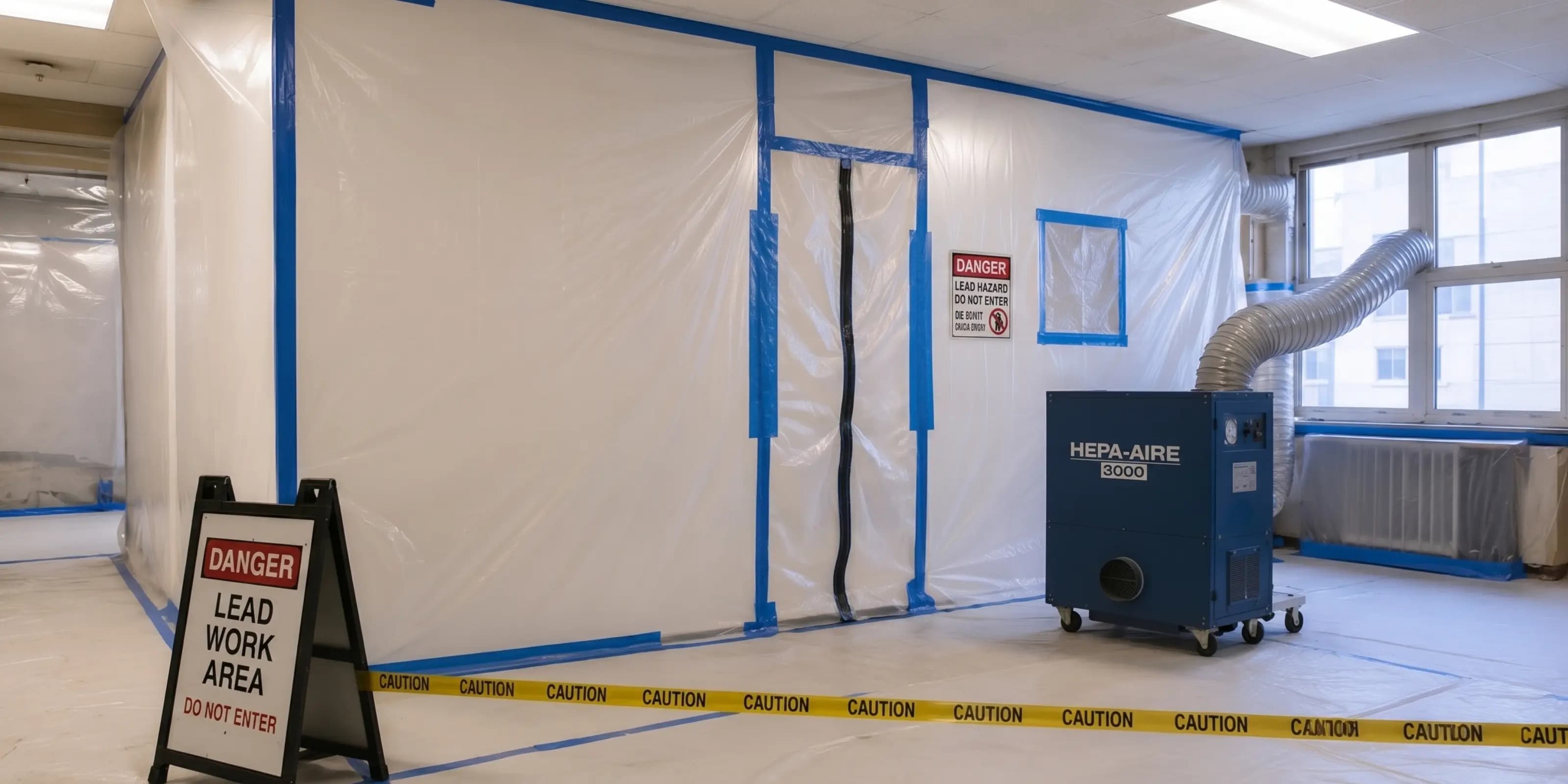
Lead abatement projects require consistent safety controls from setup through final clearance. Every step is designed to contain hazards, protect people, and document the result.
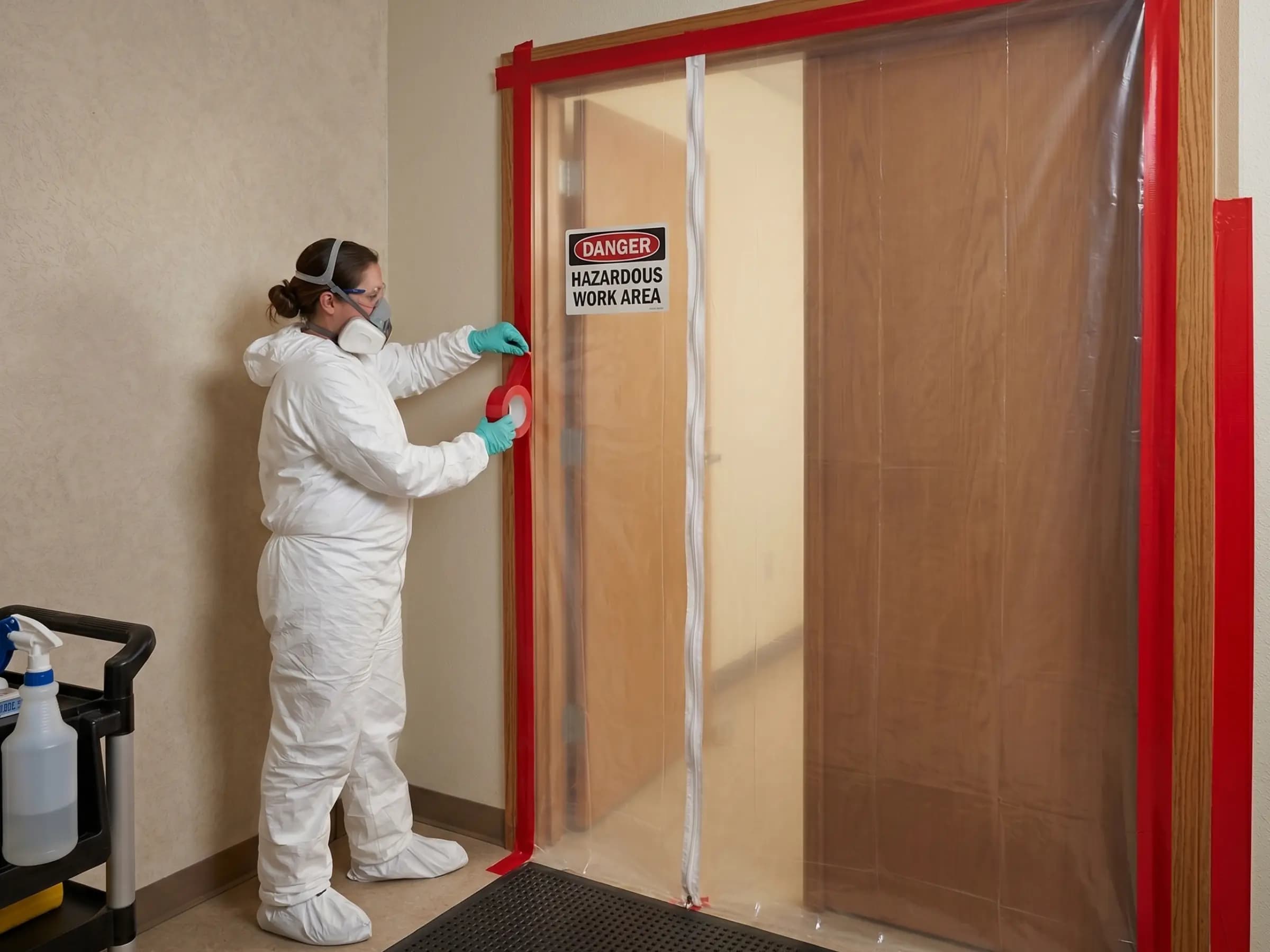
Containment Barriers and Controlled Work Zones
Work areas are isolated using poly sheeting, tape, and other barrier materials to prevent dust and debris from reaching occupied or adjacent spaces.
Dust Control and HEPA Filtration
HEPA-filtered air filtration equipment captures airborne particles during work. Wet methods and dust suppression reduce the amount of lead dust generated at the source.
Worker Protective Equipment
Abatement workers use appropriate respirators, disposable protective clothing, and gloves, consistent with the OSHA lead in construction standard (29 CFR 1926.62). Decontamination procedures prevent workers from tracking lead dust outside the work zone.
Safe Removal Methods
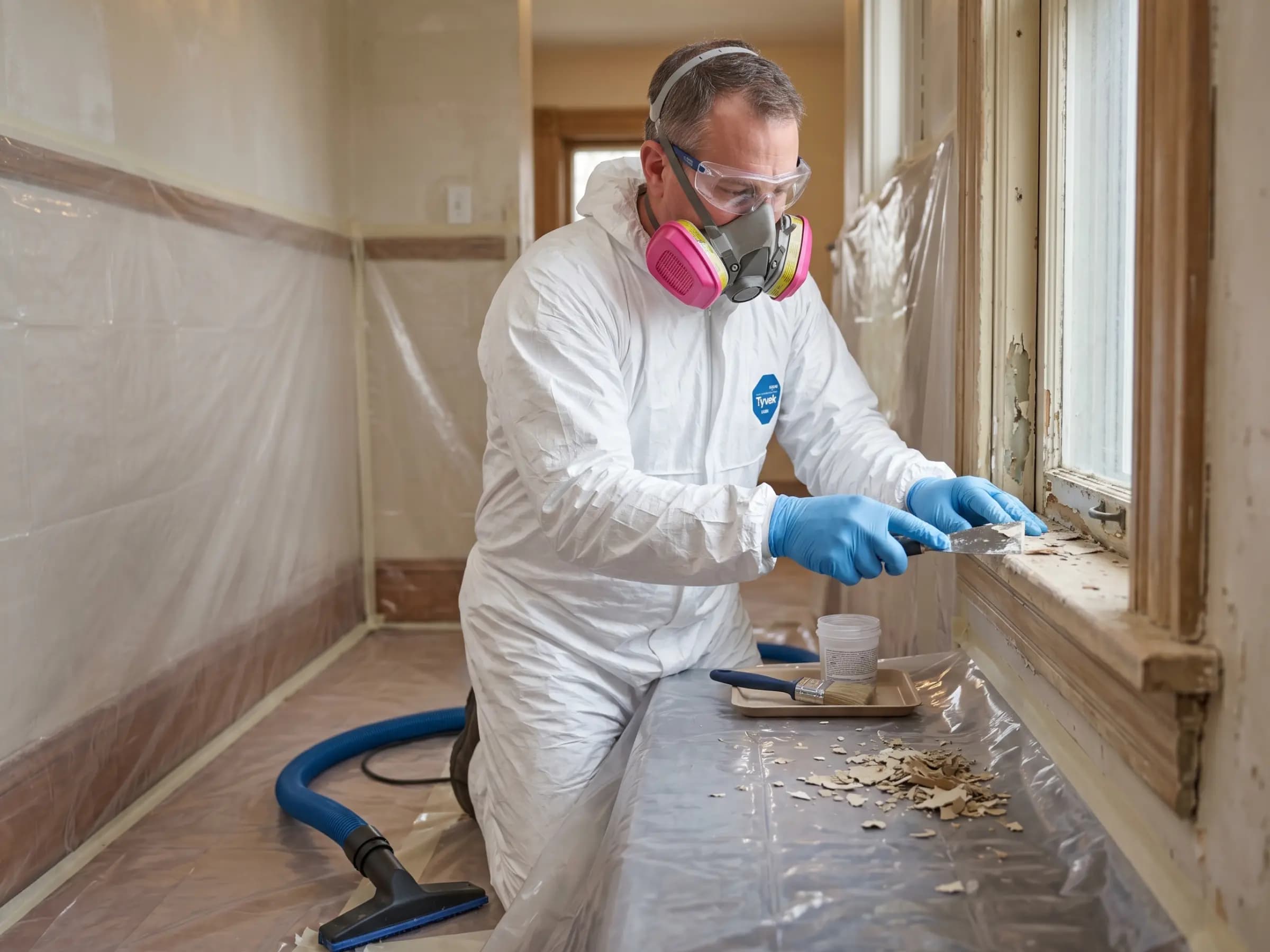
Approved methods such as wet scraping, chemical stripping, wet sanding, and careful component removal are used to minimize dust generation during abatement.
Proper Cleanup and Decontamination
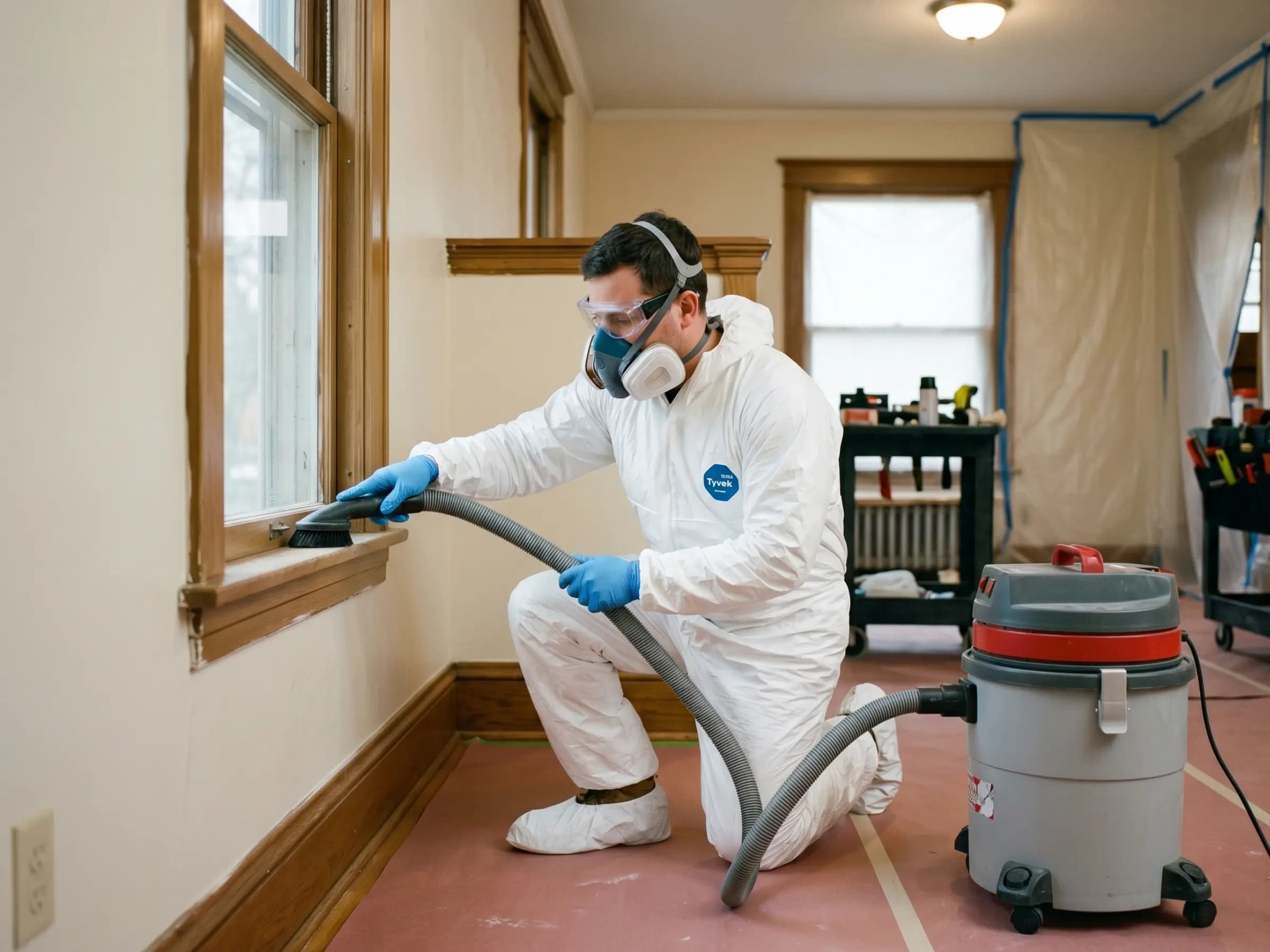
HEPA vacuuming followed by wet mopping cleans work surfaces and floors before clearance evaluation. The work area is decontaminated before containment is removed.
Waste Handling and Disposal
Lead paint waste, debris, and removed components are packaged and handled according to applicable EPA and state hazardous-waste requirements. Documentation is maintained for all regulated waste.
Clearance Support and Documentation
After cleanup, clearance evaluation may include visual inspection, dust-wipe sampling, lab analysis, and a written clearance report before the space is returned to use.
For Homeowners & Landlords
Lead Abatement for Homes and Residential Properties
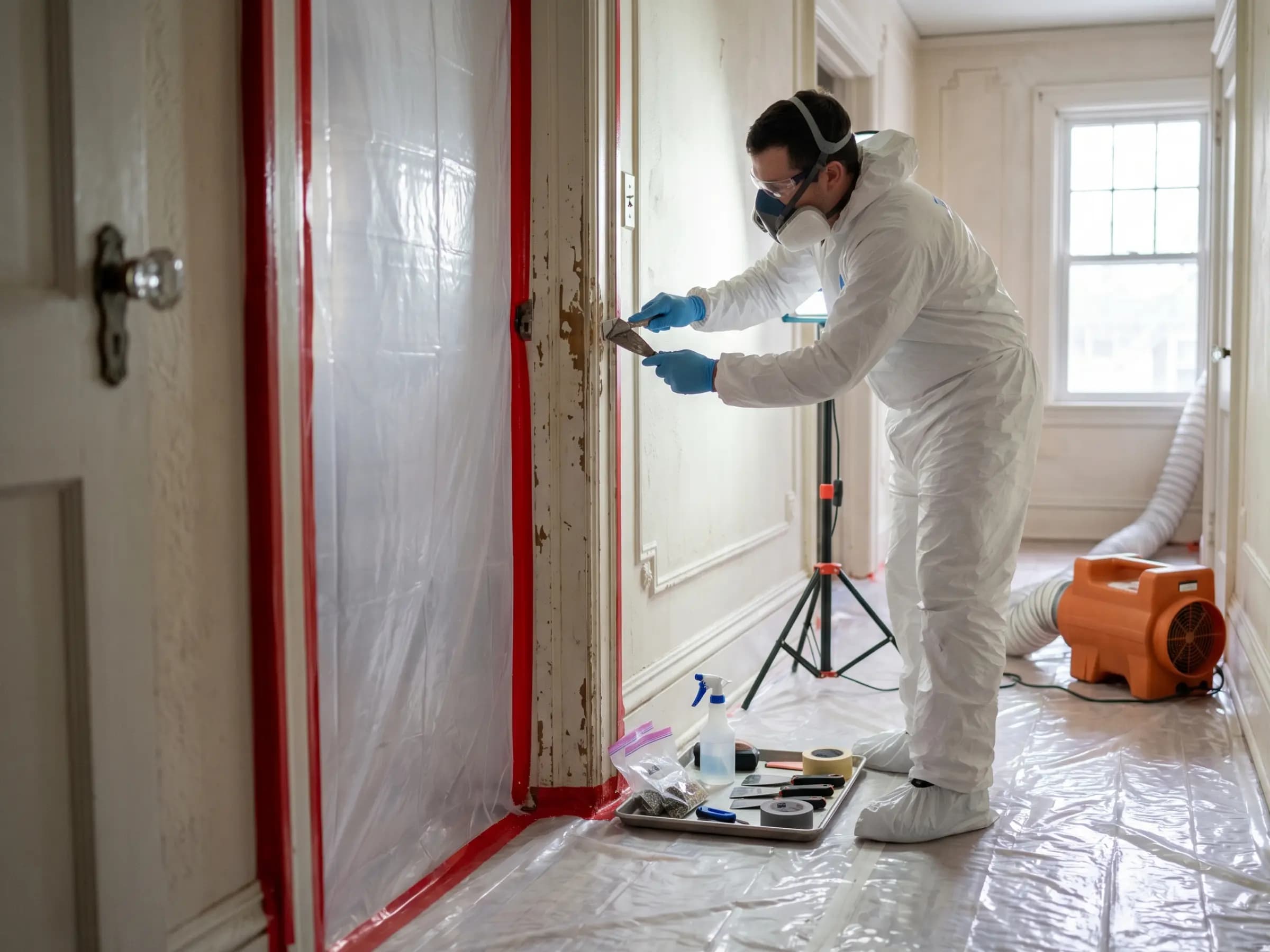
Homes built before 1978 may contain lead-based paint on interior walls, trim, doors, windows, and exterior surfaces. For homeowners, landlords, and property managers, the concern is greatest when paint is deteriorating or when renovation is planned. It is also greatest when children or pregnant women are in the home.
- Pre-renovation testing and abatement in older homes before remodeling work begins
- Abatement for homes with peeling, chipping, or deteriorating paint
- Rental unit abatement and documentation for landlord compliance
- Clearance testing to confirm the work area is clean before re-occupancy
- Component replacement for high-friction surfaces: windows, doors, and trim
- Coordination with real estate timelines for pre-sale or pre-purchase situations
Residential abatement is available for single-family homes, multi-family units, historic properties, and other residential structures. Scheduling and scope planning are designed to minimize disruption to occupants.
For Property Managers & Institutions
Lead Abatement for Commercial and Institutional Properties
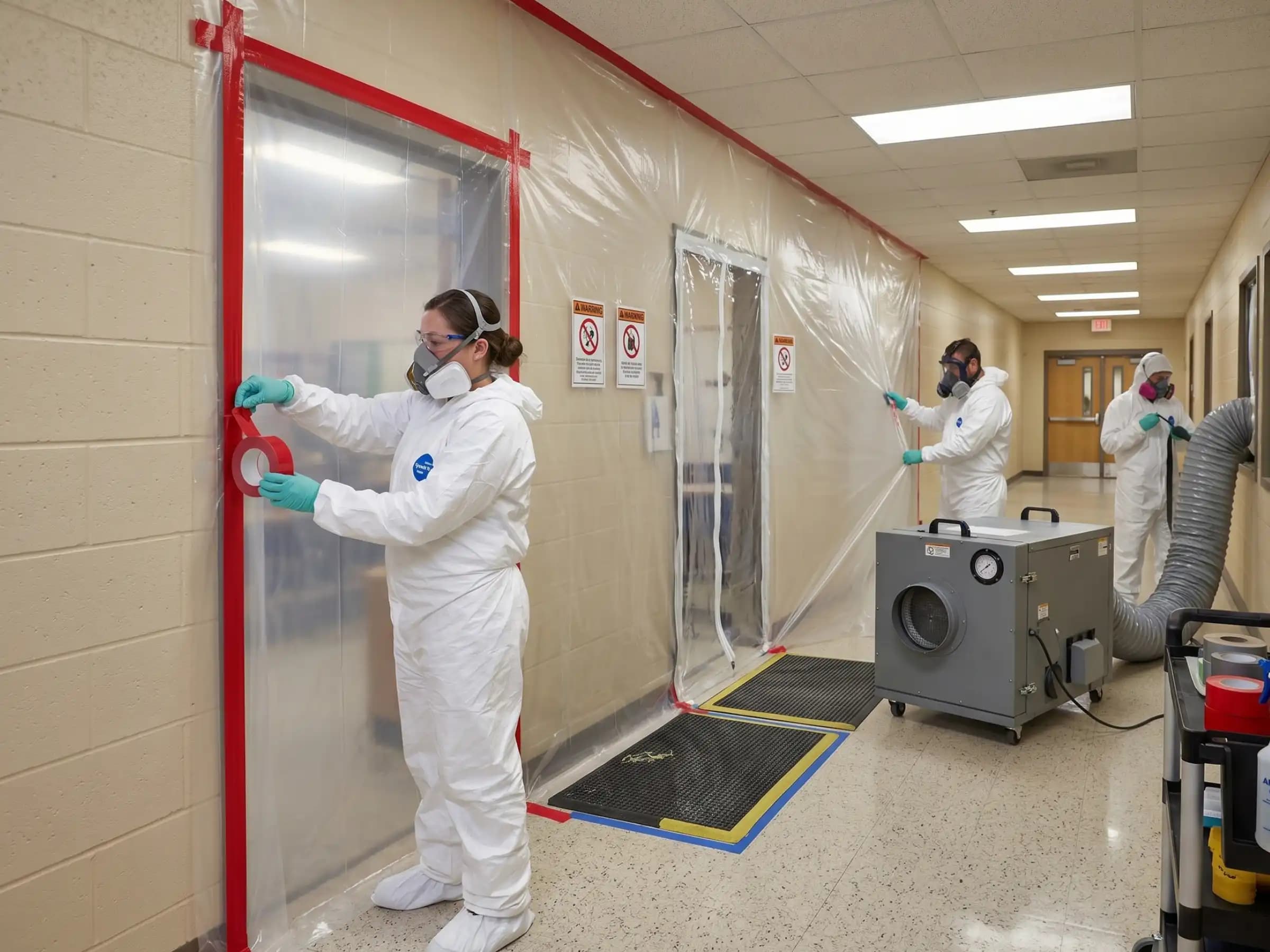
Lead abatement for commercial buildings, schools, daycares, government facilities, and managed properties requires planning around worker safety, operational schedules, containment complexity, regulated waste, and documentation. We work with property owners, facility managers, and contractors throughout the project.
- Schools, daycares, and child-occupied facilities: careful containment, off-hour scheduling, clearance support
- Commercial and office buildings: phased work, occupant protection, documentation
- Industrial facilities: larger-scope abatement with regulated waste handling
- Government and public buildings: compliance documentation, bid coordination, phased work
- Property managers and landlords: multi-unit scheduling, compliance records, repeat property coordination
- Contractors: lead-safe scope planning, RRP boundary clarification, clearance needs
Commercial and institutional projects are scoped and scheduled individually based on property type, occupancy, project goals, and documentation requirements.
Address the lead hazard properly.
Peerless Environmental provides certified lead abatement for homes and commercial properties across the Southeast.
Find Your Local Peerless Environmental Team
Peerless Environmental serves property owners across key Southeast markets. Choose your area to find local service details, contact options, and next steps for asbestos, lead, and radon concerns.
South Carolina
What Backs Our Work
Every Peerless Environmental location follows the same safety-first standard, so you get clear answers no matter which local team you call.
AHERA & EPA RRP Certified
AHERA certification for school and public building asbestos inspections, and EPA RRP certification for lead-safe work practices.
Clear Reports & Documentation
Results you can understand and share with owners, buyers, managers, or regulators.
Compliant Work Methods
Procedures aligned with EPA and state environmental regulations, from site preparation through final documentation and clearance.
Local Teams, Shared Standards
Market-level response backed by the Peerless Environmental process.
Who Needs Lead Abatement Services?
Homeowners
Older homes with peeling or deteriorating paint, households with children, pre-renovation testing, real estate transactions, and peace of mind after inspection results.
Landlords and Property Managers
Tenant safety, rental compliance, documentation for repeat properties, and turn scheduling that works around occupancy needs.
Schools and Childcare Facilities
Child-occupied spaces require careful containment, clear communication, off-hour work scheduling, and formal clearance documentation before re-occupancy.
Commercial and Industrial Owners
Worker safety, downtime planning, larger-scope projects, regulated waste handling, and compliance documentation for operations and regulatory needs.
Government and Public Buildings
Bid-compliant abatement, phased work, reporting, and compliance documentation for publicly managed facilities.
Realtors, Buyers, and Contractors
Pre-sale or pre-purchase abatement, due-diligence documentation, closing timelines, and lead-safe scope coordination for renovation projects.
What Affects Your Lead Abatement Cost
Lead abatement cost varies widely depending on the property, the scope of work, and the abatement method used. Estimates require a site review. The best way to understand cost for your project is to request one based on the actual property and surfaces involved.
- Property Size and Project Scope
- Larger properties or more extensive hazard areas require more labor, containment materials, and time. A single-room scope is very different from a whole-home or multi-unit project.
- Number and Type of Affected Surfaces
- More surfaces mean more work. Surface type (walls, trim, doors, windows, ceilings, or exterior) affects which method is most practical and what containment is needed.
- Paint Condition
- Deteriorated, peeling, or failing paint typically requires more preparation and care during removal. Sound, stable surfaces may be candidates for encapsulation rather than removal.
- Abatement Method
- Removal, encapsulation, enclosure, and component replacement have different labor and material costs. The right method for the surface and scope affects total project cost.
- Containment Complexity
- Tighter containment requirements (such as occupied buildings, child-occupied spaces, or large open areas) increase setup time and material cost.
- Waste Handling and Disposal
- Lead paint waste requires proper packaging, handling, and disposal. Projects with larger debris volumes or regulated waste have higher disposal costs.
- Clearance Testing and Documentation
- Clearance testing, lab analysis, and formal reports are part of most certified abatement projects. Documentation requirements affect cost depending on the scope and intended use of the results.
- Residential vs. Commercial Project Complexity
- Commercial, institutional, and industrial projects typically involve more complex containment, phasing, scheduling, and documentation than residential projects of similar physical scope.
Cost ranges published online are rarely accurate for specific properties. Request an estimate. The price depends on what is actually on your surfaces, how the space is used, and what your documentation needs are.
Why Choose Peerless Environmental
Peerless Environmental provides certified lead abatement services for homes, schools, commercial buildings, and managed properties across the Southeast. Our team is built around safe, compliant, documented work that holds up to scrutiny.
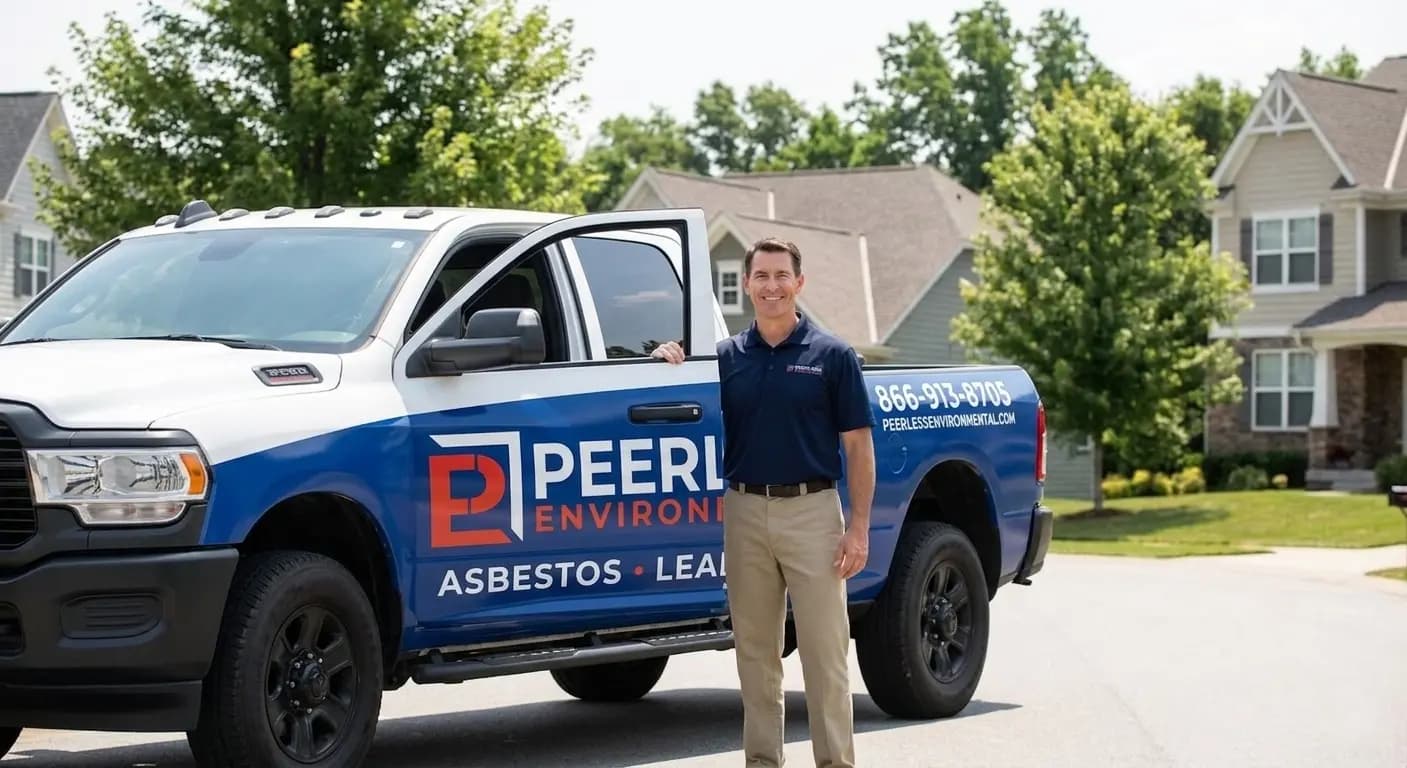
Certified Lead Abatement Professionals
Our team includes certified lead abatement professionals trained to handle lead hazards using approved methods, containment procedures, and safety controls.
Licensed and Insured
Peerless Environmental operates as a licensed and insured environmental services company. We carry appropriate coverage for the work we perform on residential and commercial properties.
Experience Across Property Types
We work on older homes, multi-family rentals, schools, daycares, commercial buildings, government facilities, and industrial properties. Each project is scoped based on the property and what it actually needs.
Containment and Dust-Controlled Work
Every project uses proper containment, HEPA filtration, dust suppression, and documented cleanup procedures. We do not cut corners on the steps that protect occupants and confirm results.
Clear Documentation and Communication
Projects are documented from work plan through clearance. You get written records for compliance, property files, tenant communication, real estate use, and future contractor reference.
Coordination with Owners, Managers, and Contractors
We coordinate with property owners, landlords, property managers, realtors, and contractors throughout the project, from scheduling through final documentation.
Project Gallery
Common Questions
What Is Abatement
What is lead abatement?
Lead abatement is work designed to control or eliminate lead-based paint hazards. Depending on the property and the hazard, it may include removal, encapsulation, enclosure, component replacement, HEPA cleaning, waste handling, and clearance documentation.
How do I know if my property has lead paint?
Homes and buildings built before 1978 are more likely to contain lead-based paint. The only reliable way to know where lead is present is through professional inspection, testing, or risk assessment. If paint is peeling, chipping, cracking, or likely to be disturbed during renovation, schedule an inspection before work begins.
What is the difference between lead abatement and lead testing?
Lead testing identifies whether lead is present and where the hazards are. Lead abatement is the work used to address those hazards after they are found. Many projects start with testing or inspection, then move into abatement when hazards need to be controlled.
What is the difference between lead abatement and RRP work?
RRP work applies to renovation, repair, and painting projects that may disturb lead-based paint. Lead abatement is specifically intended to address lead hazards. They can involve similar safety controls, but they are not the same service or certification program.
When & Why
When is lead abatement needed?
Lead abatement may be needed when a lead inspection or risk assessment finds hazardous conditions, or when deteriorated lead paint creates dust or chips. It may also be needed when a property must meet safety or compliance requirements, or when renovation work could disturb lead-painted surfaces.
Can I remove lead paint myself?
DIY scraping, sanding, grinding, or demolition can spread lead dust through a home or building. Professional lead abatement uses containment, dust control, HEPA cleaning, safe work methods, and documentation to reduce exposure risk. For occupied homes, rentals, or compliance situations, certified abatement produces a documented result that uncontrolled DIY work cannot.
Is lead abatement safe for my family, tenants, or staff?
A qualified abatement company isolates the work area, controls dust, protects occupants, cleans the site, and supports clearance procedures. The right safety plan depends on the property, project scope, and whether the building is occupied during work.
Safety & Process
Do I need to leave the property during lead abatement?
It depends on the work area, project size, occupancy, and safety plan. Some projects allow occupants to remain away from the contained work area. Larger or higher-risk scopes may require temporary relocation from affected spaces.
Is encapsulation as good as removal?
Encapsulation can be a good option when lead-painted surfaces are stable and the right coating or barrier can be used. Removal or component replacement may be better when surfaces are badly deteriorated, high-friction, or need permanent elimination. The right choice depends on inspection results, surface condition, and project goals.
How much does lead abatement cost?
Cost depends on the number of affected surfaces, paint condition, method used, containment setup, accessibility, waste handling, and clearance documentation. It also depends on whether the project is residential or commercial. The best next step is an inspection or estimate based on the actual property.
Cost & Results
What happens after lead abatement is complete?
After work is complete, the area is cleaned and may require clearance testing, depending on the project. Clearance can include visual review, dust-wipe sampling, lab analysis, and documentation confirming the completed scope.
Do you provide clearance testing and documentation?
We help plan each project around clearance needs and provide clear documentation for the completed scope. Post-abatement clearance testing and written records are part of the process for most certified abatement projects.
Address the lead hazard properly.
Request a free lead abatement estimate from Peerless Environmental. We serve homes, schools, and commercial properties across the Southeast.
Each Peerless Environmental location is independently owned and operated. Services, availability, and certifications may vary by location.