
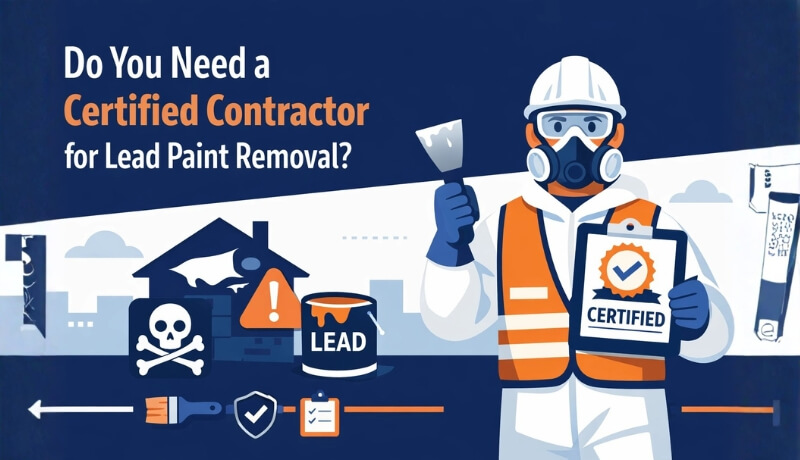
The short answer is: Yes. In almost every scenario involving a pre-1978 structure, federal law and safety protocols require specialized certification. However, the type of certification you need depends entirely on the scope of your project.
Thank you for reading this post, don't forget to subscribe!For decades, lead was the “gold standard” of the painting industry. It was durable, it dried quickly, and it resisted moisture with an efficiency that modern alternatives often struggle to match. But today, that legacy remains as an invisible threat lurking within the walls of millions of American homes. If your property was built before 1978, the question of whether you need a certified contractor for lead paint removal isn’t just a matter of home improvement: it is a matter of public health, legal liability, and profound duty to your family or tenants.
Key Takeaways
- Certification often matters: Lead paint removal can require an EPA-certified contractor, especially in pre-1978 homes and child-occupied spaces.
- RRP and abatement differ: Renovation, repair, and painting rules are not the same as full lead abatement work.
- Disturbing paint creates risk: Scraping, sanding, cutting, and demolition can release dangerous lead dust.
- Compliance protects more than health: Proper certification helps reduce liability, protect occupants, and support legal compliance.
- Containment and cleanup matter: Lead-safe work practices help control dust and keep contamination from spreading.
- The right contractor guides next steps: A qualified professional can explain whether your project needs testing, renovation controls, or abatement.
The Ominous Legacy: Why Lead Paint Demands Expertise
Lead is a potent neurotoxin. When lead-based paint begins to peel, chip, or: most dangerously: gets sanded or scraped during a renovation, it creates microscopic dust. This dust is often invisible to the naked eye, yet it is a “silent killer” that can cause irreversible neurological damage, especially in children and pregnant women.
At Peerless Environmental, we view lead remediation not as a construction task, but as a clinical decontamination process. When you disturb lead paint without the proper containment, you aren’t just making a mess; you are potentially contaminating every square inch of your living environment.
The Legal Reality: EPA Certification Requirements
The Environmental Protection Agency (EPA) does not view lead paint as a DIY-friendly material. There are two primary regulatory frameworks you need to understand:
1. The RRP Rule (Renovation, Repair, and Painting)
If you are hiring a contractor to perform standard renovations: like replacing windows, remodeling a kitchen, or repainting a room: and that work will disturb more than 6 square feet of interior lead paint or 20 square feet of exterior lead paint, the EPA’s RRP Rule applies.
Under this rule, the firm must be EPA-certified, and the work must be supervised by a “Certified Renovator.” These professionals are trained in lead-safe work practices, including dust containment and specialized cleanup.
2. Lead Abatement
Lead abatement is different. This refers to projects specifically designed to permanently eliminate lead-based paint hazards. This might be ordered by a state agency following a child’s elevated blood lead level, or requested by a property owner who wants the liability gone forever.
Abatement requires a higher level of certification and more rigorous oversight than standard renovation. This is where lead abatement specialists come in, utilizing heavy-duty containment and specialized removal techniques that exceed standard construction capabilities.
Identifying the Risk: “Good Crews Leave Clues”
If you are walking through your home and see “alligatoring” paint (paint that has cracked into a pattern resembling reptile scales) or layers of peeling green or white pigment on window sills, you are looking at a potential hazard.

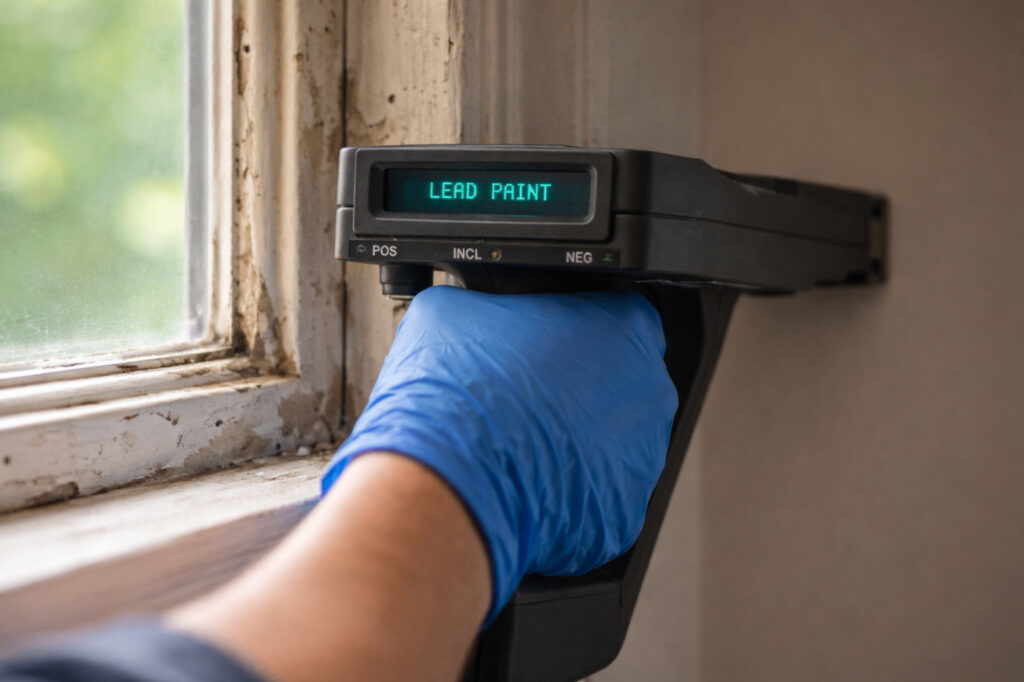
Good crews leave clues, but you need to know where to look. A certified contractor will begin with an assessment. They won’t just guess; they will use technology like XRF (X-Ray Fluorescence) analyzers to detect lead behind layers of newer paint without damaging the surface.
If you suspect lead in your home, professional lead testing is the only way to move from uncertainty to a clear plan of action.
The Dangers of Cutting Corners
It is tempting to hire a “handyman” who promises to scrape and paint your old siding for a fraction of the cost of an environmental firm. However, this is one of the most dangerous industry pitfalls.
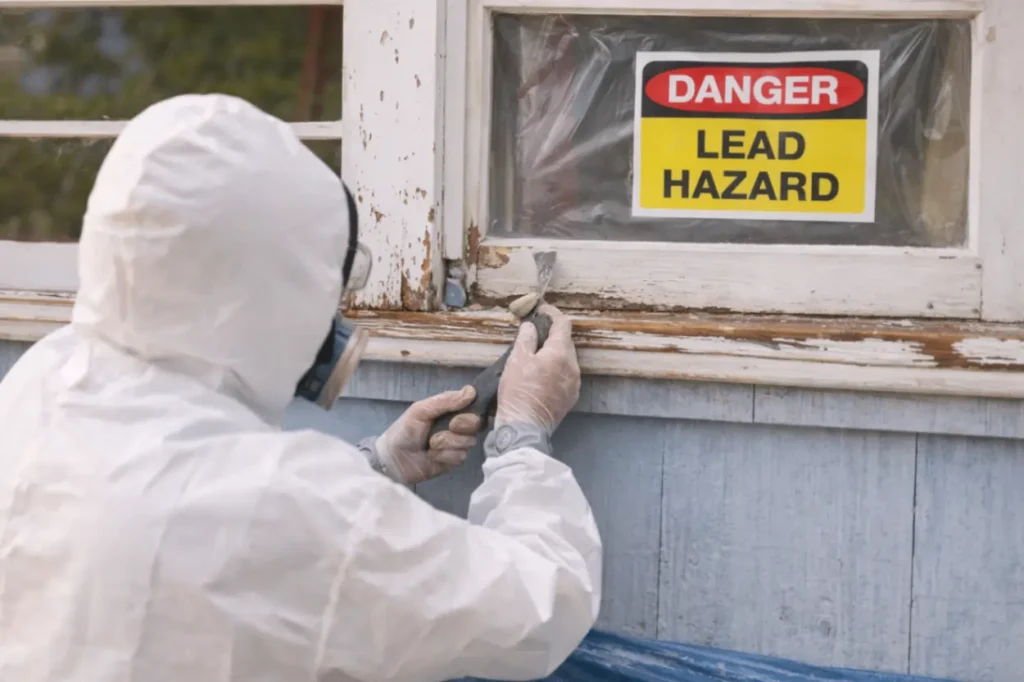
Uncertified contractors often use “open-flame burning” or high-speed power sanding without HEPA attachments. These methods vaporize lead or create a fine mist of toxic dust that settles in your carpets, air ducts, and soil. Once a home is contaminated with lead dust through improper work, the cost to decontaminate it can be ten times the cost of doing it right the first time.
The Protective Stance: Why Peerless Stands Apart
We serve communities across South Carolina: from the historic districts in Charleston to the growing neighborhoods of Greenville and Columbia. In these regions, many homes carry the architectural beauty of the early 20th century, which almost guarantees the presence of lead.
Our mission is rooted in a “profound duty” to protect these communities. When Peerless Environmental steps onto a job site, we don’t just “paint.” We implement a rigorous defense system:
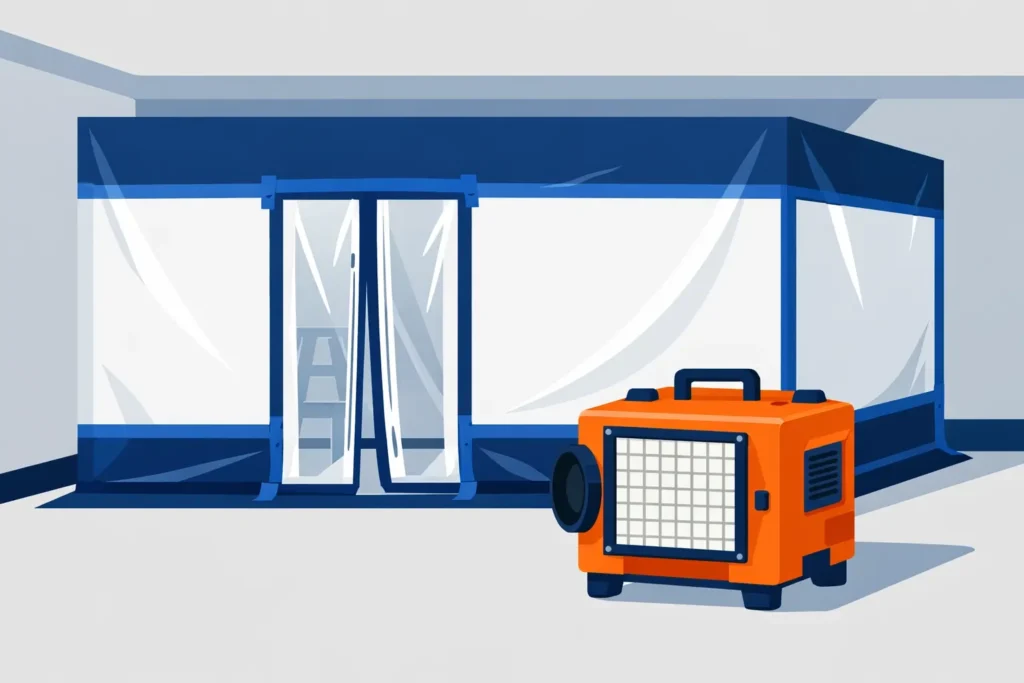
- Critical Barriers: We seal off the work area using 6-mil plastic sheeting and “sticky mats” to ensure no dust escapes.
- HEPA Filtration: We use industrial-grade vacuums and air scrubbers designed to trap particles as small as 0.3 microns.
- Wet Methods: We use specialized misting techniques to keep dust from ever becoming airborne.
- Verification: We don’t just say it’s clean; we perform indoor air quality tests and dust wipe samples to prove the environment is safe for re-entry.
Distinguishing Fact from Fiction: Common Lead Myths
Myth: “I can just paint over it with Encapsulant.”
The Reality: While lead encapsulants are a real tool, they are not a “one-size-fits-all” fix. If the underlying paint is already peeling or if the surface is a “friction surface” (like a window sash or a door frame), encapsulation will fail. A certified contractor knows when to encapsulate and when full removal is the only safe option.
Myth: “Lead is only a problem if kids eat the paint chips.”
The Reality: While eating chips is dangerous, the most common cause of lead poisoning is the inhalation of lead-contaminated dust. This dust is often invisible and created by the simple act of opening and closing a lead-painted window.
Myth: “Testing is too expensive.”
The Reality: Testing provides a roadmap. Often, we find that lead is only present on specific components (like trim or windows) and not the walls. This allows for a targeted, cost-effective remediation plan rather than an expensive, full-house abatement.
Choosing Your Advisor: What to Ask a Contractor
If you are interviewing firms for lead paint work, do not be afraid to be rigorous. A professional will welcome your questions. Ask for:
- Their EPA Firm Certification number.
- The names of the Certified Renovators who will be on-site.
- A detailed plan for dust containment and waste disposal.
- References from previous lead-specific projects.
Companies that may not have your best interests at heart will try to downplay the risks or skip the paperwork. Remember: if they are willing to break federal EPA laws, they are likely willing to cut corners on your safety as well.
A Sense of Mission
At the end of the day, environmental remediation is about peace of mind. Whether you are a property manager in Columbia or a first-time homeowner in Greenville, you deserve to know that your environment is not working against your health.
Do you need a certified contractor for lead paint removal? If you value the health of your family, the legality of your project, and the long-term value of your property, the answer is a resounding yes.
If you have questions about a suspected lead hazard or need to schedule a consultation, the team at Peerless Environmental is here to act as your trusted advisor. Visit our FAQ page or contact us today to ensure your home remains a sanctuary, not a hazard.

Daniel Smoke is the Director of Operations at Peerless Environmental. He helps set field standards and safety protocols that support compliant asbestos testing and removal, lead services, and radon testing and mitigation.